We Almost Shipped 280 Clamp Meters to Manila. Then My QA Lead Brought Me a Different Number.
The order that looked fine on paper
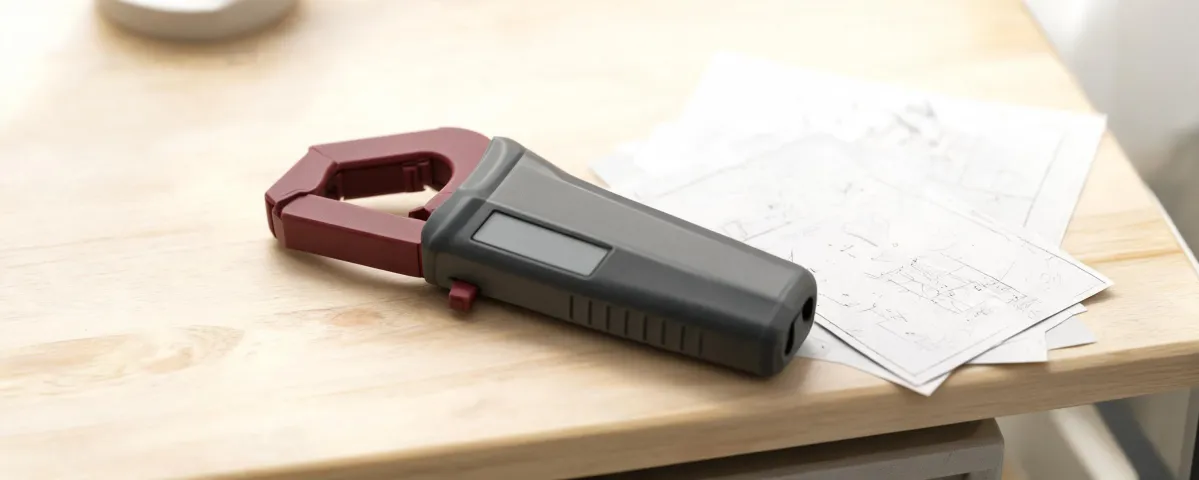
On a Tuesday afternoon in late November 2024, my QA lead forwarded me a one-line message: "Can you come down to the bench? The 400V units are reading high." We had 280 true RMS clamp meters staged for a Philippine electrical contractor — part of a scheduled delivery for their Q1 substation upgrade project. The cartons were sealed, the labels matched the PO, and the supplier's certificate of analysis had arrived by email the week before. Everyone downstream of me was ready to sign off.
I'm a quality and brand compliance manager at a sourcing company that supplies electrical test instruments to B2B buyers in Malaysia and the Philippines. I've been reviewing vendor deliveries for a little over four years. Roughly 200 SKUs pass through our QC bench annually, and I probably reject somewhere between 12 and 18 percent of first deliveries — usually for packaging, labeling, or documentation issues. But this was the first time in a while that the bench reading itself was the problem.
What the spec sheet promised
The line item was specific: true RMS digital clamp meter, 400V max AC, AC current range covering typical contractor loads, CAT III rated for distribution-level work. That's a fairly standard configuration for Filipino and Malaysian contractors doing panel work, motor maintenance, and HVAC diagnostics. True RMS matters here because a lot of the loads are non-sinusoidal — VFDs, LED drivers, switching power supplies. An averaging meter reads those waveforms wrong, sometimes by 10–15 percent, which is the difference between "motor is fine" and "motor is drawing too much."
The supplier we used for this batch had quoted at roughly 30 percent below our previous source. To be fair, their documentation was clean. Their spec sheet listed "True RMS" as a feature and "400V" as the max AC voltage. On paper, it ticked every box.
The bench test that changed things
My QA lead had pulled three units from the pallet for incoming inspection — standard AQL sampling, nothing unusual. On a resistive load, they matched our reference meter to within 1 percent. Fine. Then she switched to a small VFD-driven motor on the test bench, the kind of load our Philippine customer would actually be measuring.
The readings drifted. Not dramatically — maybe 4 to 6 percent high on the current channel, and 3 percent low on voltage compared to our reference. That's not catastrophic, but it's outside our spec. We allow ±2 percent on the AC current channel for non-sinusoidal loads. Anything looser and the contractor ends up chasing a problem that doesn't exist.
I asked the supplier's technical contact to explain. The response was, essentially, "Our meter is true RMS certified, and any variation on distorted waveforms is within industry standard." I've heard that phrasing before. "Within industry standard" often means "we measured on a clean sine wave and called it a day."
What I found after a bit of digging was subtler than a fake label. The meter was true RMS — on the current channel. The voltage channel was averaging. For contractors checking line current on motor loads, that's less of a problem. For contractors checking voltage on the same loads, it's a real one. And the 400V rating? It was the display maximum, not the rated measurement category. The unit carried a CAT II claim in the manual's fine print, which is a different animal from CAT III.
The decision to reject
I'll be honest: my first instinct was to push the batch through. The delta was small, the customer wasn't measuring in a lab, and re-sourcing 280 units in November meant a lead-time hit that would probably cost us the account. I sat on the decision for most of a day.
What tipped it was a conversation with our account manager for the Philippine customer. He mentioned that this contractor had specifically bought these meters to diagnose motor overloads on VFD-driven pumps. The exact use case where the averaging voltage channel would mislead them. If we shipped, we'd be handing a working-looking tool that quietly gives the wrong number in the one scenario they care about. That's not a quality problem — that's a brand problem that shows up six months later in a customer complaint we can't defend.
We rejected the batch. The supplier pushed back, then eventually agreed to rework and re-ship at their cost. The rework added 18 days to the schedule. We ate some of that in overtime and a partial air-freight upgrade. I'd estimate the total cost to us — freight difference, admin time, a small credit to the customer for the delay — landed somewhere around $9,000 to $11,000. Had we shipped and had the customer discovered the issue in the field, the replacement and reputational math looked a lot worse.
What I do differently now
After that episode I built a 12-point incoming inspection checklist specifically for clamp meters, and the first five points are all about waveform behavior and category rating:
- Confirm true RMS on every channel the customer will use, not just the headline one.
- Bench-test at least two units on a non-sinusoidal load — a small VFD or variable-speed motor is enough.
- Match the stated CAT rating to the environment: CAT II for plug loads, CAT III for distribution panels, CAT IV for service entrances. Verify the rating appears on the device body, not just the manual.
- Check that the 400V (or stated) max applies to the rated category, not just the display.
- Ask for the supplier's accuracy data on distorted waveforms, not just at 50/60 Hz sine.
That checklist has been in place since early 2025. In the last four incoming lots, it has flagged two spec mismatches before the goods got past our bay doors. Neither was as serious as the Manila batch, but both would have generated customer friction.
A note on pricing and context
Buyers in Malaysia and the Philippines often ask me what a true RMS 400V clamp meter should cost. I can only speak to the B2B sourcing channel we operate in, and prices move. As of our Q1 2025 sourcing rounds, landed pricing for a properly-rated CAT III true RMS unit in the 400V class ranged from roughly $28 to $65 per piece depending on brand tier, quantity, and whether calibration documentation was included. The sub-$25 quotes I've evaluated almost always had at least one hidden compromise — usually the voltage channel, occasionally the CAT rating.
That said, this was our experience with our supply chain. If you're buying single units or from a local distributor in Manila or Kuala Lumpur, the calculus is different — you're paying for immediacy and often for local warranty support, which has real value. And if your use case is mostly clean resistive loads, the waveform behavior I'm describing may not bite you in the same way. I'd still check.
The lesson I keep repeating
Prevention beats cure. It sounds trite until you've written the email telling a customer their order is late. Five minutes on the bench — literally, a VFD, a reference meter, and a printout of the spec — is cheaper than five days of rework, freight, and apology. That batch in November 2024 cost us perhaps $10,000 and some goodwill. The checklist cost me an afternoon to write.
I'm not claiming every quality problem is catchable on the bench. Some aren't. But in my experience, the majority of the expensive ones are — we just skip the five minutes because the paperwork looks right.
Permanent link: /blog/we-almost-shipped-280-clamp-meters-to-manila-then-my-qa-lead-1.html

Jane Smith
I’m Jane Smith, a senior content writer with over 15 years of experience in the packaging and printing industry. I specialize in writing about the latest trends, technologies, and best practices in packaging design, sustainability, and printing techniques. My goal is to help businesses understand complex printing processes and design solutions that enhance both product packaging and brand visibility.